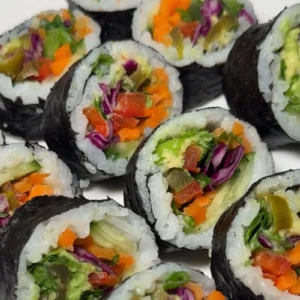
Spicy Rainbow Veggie Sushi Roll with Jalapeño + Avocado
Beginner-proof veggie sushi that’s crunchy, creamy, and spicy with a clean restaurant-style roll and perfect cuts.
Equipment
- Bamboo sushi rolling mat
- Plastic wrap
- Medium saucepan with lid or rice cooker
- Fine mesh strainer
- Large bowl
- Small saucepan or microwave-safe bowl
- Rice paddle or silicone spatula
- Sharp knife
- Cutting board
- Small bowl of water
- Clean damp kitchen towel
- Paper towels
Ingredients
Sushi Rice
- 2 cups sushi rice, uncooked, rinsed until water runs mostly clear
- 2.25 cups water, for stovetop cooking (or use rice cooker fill line)
- 1 piece kombu, optional, about 2 inches
- 0.33 cup rice vinegar, unseasoned
- 2 tablespoons cane sugar, or granulated sugar
- 1 teaspoon fine salt
Spicy Rainbow Veggie Fillings (Mix and match, but here is my exact combo)
- 2 each avocado, sliced into thin strips
- 2 each cucumber, cut into thin matchsticks
- 2 cups red cabbage, shredded thin
- 2 cups carrots, shredded
- 1 each red bell pepper, cut into thin matchsticks
- 0.5 cup cilantro, leaves and tender stems
- 0.5 cup green onion, thinly sliced
- 0.5 cup pickled jalapeño, patted very dry with paper towels
Rolling + Serving
- 8 sheets nori (seaweed sheets), full size
- 1 small bowl water, for wetting fingertips and sealing the roll
- 1 teaspoon toasted sesame seeds, optional
- As needed soy sauce or coconut aminos, for dipping
Optional Spicy Drizzle (If you want that “spicy rainbow roll” energy)
- 0.33 cup mayo, regular or vegan
- 1 to 2 tablespoons sriracha, to taste
- 1 teaspoon rice vinegar or lime juice, optional for brightness
- 1 teaspoon maple syrup or sugar, optional for balance
Instructions
- Rinse the Rice Until It Behaves: Add sushi rice to a bowl, cover with cold water, swish with your hand, then drain. Repeat 4 to 6 times until the water goes from cloudy to mostly clear. This is the difference between sticky in a good way and sticky in a glue way.
- Soak for Better Texture: Cover the rinsed rice with fresh water and let it soak 15 minutes, then drain well. This helps the grains cook evenly so your rice is tender, not crunchy in the middle.
- Cook the Rice the Right Way (Stovetop): Add drained rice and 2.25 cups water to a pot. If using kombu, lay it on top. Bring to a boil over medium-high heat, then immediately cover and reduce heat to low. Cook 15 minutes. Turn heat off and rest 10 minutes covered. Remove kombu.
- Cook the Rice the Right Way (Rice Cooker): Add drained rice to the cooker and fill water to the 2-cup line. Add kombu if using. Cook, then let it sit on warm 10 minutes. Remove kombu.
- Make the Seasoning So It Blends Smooth: Add rice vinegar, sugar, and salt to a small bowl or pan and warm just until the sugar dissolves. Warm, not boiling. You want it silky, not sharp.
- Season the Rice Like a Sushi Instructor: Transfer hot rice to a wide bowl or baking dish. Drizzle seasoning evenly over the rice. Use a rice paddle to slice and fold, not stir. Think “cut through and fold over,” rotating the bowl as you go. If you can, fan the rice while folding. That gives you that glossy, restaurant finish. Cover the rice with a damp towel so it stays soft while you roll.
- Set Up Your Rolling Station: Place your bamboo mat on the counter and wrap it tightly in plastic wrap. This keeps rice from getting stuck in the mat grooves and makes rolling feel way less stressful. Put a small bowl of water nearby for your hands and sealing. Keep a damp towel nearby to wipe your fingers if they get too sticky.
- Prep Fillings So the Roll Closes Clean: Slice everything thin. Big chunks make lumpy rolls that pop open. Pat pickled jalapeños very dry with paper towels. Pickle juice can make the nori soggy and can also cause slipping.
- Place Nori Correctly Every Time: Lay 1 sheet of nori shiny-side down on the mat. The rough side should face up because that’s what grabs onto the rice. Position it so the bottom edge lines up with the bottom of the mat.
- Wet Your Hands First (This Changes Everything): Dip fingertips in water and rub your hands together so they are lightly damp, not dripping. Damp hands keep rice from sticking to you.
- Spread the Rice in a Thin, Even Layer: Scoop about 0.5 to 0.75 cup seasoned rice onto the nori. Gently spread it out in an even layer, pressing lightly so it holds together. Leave a 1-inch strip of nori uncovered at the top edge. That blank strip is your “seal zone.”
- Build the Filling Line in the Right Spot: Place your fillings in a horizontal line across the lower third of the rice, about 1 to 1.5 inches from the bottom edge. Start modest. Overstuffing is the main reason beginner rolls explode.
- Place Jalapeño Next to or On Top of Avocado On Purpose: Put the pickled jalapeño directly next to the avocado strips, or right on top of them. Avocado acts like a creamy buffer, so the heat feels balanced instead of harsh. It also helps “glue” slippery jalapeño slices in place so they do not slide around when you roll or cut.
- Start the Roll with a Firm First Turn: Lift the bottom edge of the mat with your thumbs while holding the fillings in place with your fingers. Roll the nori up and over the filling until the rice meets rice. Pause there.
- Press and Shape Like a Pro: With the roll still inside the mat, gently squeeze and shape it into a neat log. Not crushing it, just firm enough so it holds together. This is how your rolls look clean and tight, not loose and messy.
- Finish Rolling and Seal It: Keep rolling forward until you reach the top edge. Now wet your fingertips lightly and run them across that uncovered 1-inch strip of nori. This is the edible “glue.” Roll one final time to seal. Give it one more gentle press through the mat to set the shape.
- Repeat With Remaining Nori: Keep your rice covered with the damp towel between rolls so it stays soft and easy to spread.
- Cut Clean Slices Without Smashing Your Roll: Use a very sharp knife. Wet the blade slightly, not dripping wet, then wipe once with a towel so it is just lightly damp. This prevents tearing and keeps rice from sticking to the blade. Cut the roll in half first. Line the halves up and cut them in half again. Then cut those into eighths for 8 pieces total. Re-wet and wipe the knife between cuts if it starts to drag.
- Serve Like You Meant It: Sprinkle sesame seeds if you want, plate with soy sauce or coconut aminos, and watch everybody act like you ordered takeout.
Notes
- Beginner win: Thin rice layer beats thick rice layer every time. If your first roll feels rice-heavy, use a little less on the next one.
- If your nori feels stiff: Let it sit rice-side up for 30 to 45 seconds before rolling. It softens just enough to bend without cracking.
- If your roll keeps opening: You likely overfilled, the jalapeños were too wet, or you forgot to wet the seal zone. All three are easy fixes.
- If cutting looks messy: Your knife is dull, your blade is too wet, or you are pressing down too hard. Think confident, smooth slices, not sawing.
- Want it spicier without more jalapeño: Drizzle the optional spicy sauce on top, or dip the roll in a mix of soy sauce plus a tiny touch of sriracha.