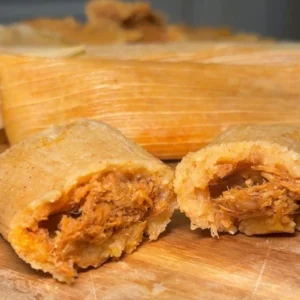
Spicy Pork Tamales With Homemade Red Chile Sauce
Tender chile-braised pork + silky red chile sauce + fluffy moist masa. A Houston-approved tamale recipe with beginner cues, tips, and troubleshooting.
Equipment
- Large heavy pot with lid, for cooking pork
- Large bowl, for soaking husks
- Tongs, for handling chiles
- Skillet (cast iron or stainless works great), for toasting chiles
- Blender, for sauce
- Fine mesh strainer or nut milk bag, for straining sauce
- Saucepan, for simmering sauce
- Large mixing bowl, for masa
- Hand mixer or stand mixer (recommended for fluffy masa), optional but helpful
- Rubber spatula + sturdy spoon, for mixing and scraping
- Steamer pot with steamer insert (or makeshift steamer setup), for steaming tamales
- Kettle or small pot, to keep extra water hot for the steamer
- Measuring cups/spoons + kitchen scale (nice to have, not required)
Ingredients
Corn Husks
- 1.0, pound dried corn husks, rinsed well (buy a 1 lb bag, you’ll use most of it)
- 2.0, quarts warm water, for soaking husks (enough to fully cover)
- Pork Tender, Shreddable Filling
- 5.0, pounds pork shoulder (Boston butt), bone-in or boneless, cut into 2–3 big chunks
- 1.0, tablespoon kosher salt, plus more to taste
- 2.0, teaspoons black pepper
- 2.0, teaspoons garlic powder
- 1.0, teaspoon onion powder
- 2.0, teaspoons ground cumin
- 1.0, teaspoon dried Mexican oregano, crushed between your fingers
- 2.0, each bay leaves
- 8.0, cloves garlic, smashed (add more if your heart says so)
- 1.0, each white onion, cut into thick wedges
- 8.0, cups water, plus more as needed to keep pork mostly covered
Homemade Red Chile Sauce (Spice Level 6, Flavor First)
- 12.0, each dried guajillo chiles, stems removed, seeded
- 6.0, each dried ancho chiles, stems removed, seeded
- 6.0, each dried chile de arbol, stems removed (leave a few seeds if you want more heat)
- 3.0, cups hot water, for soaking chiles (save a bit for blending)
- 0.5, cup white onion, roughly chopped (about 80–100 g)
- 6.0, cloves garlic, peeled
- 1.5, cups pork cooking broth, hot (or chicken broth if you need to move faster)
- 2.0, tablespoons tomato paste, optional but helpful for body and color
- 1.0, teaspoon ground cumin
- 1.0, teaspoon dried Mexican oregano, crushed
- 1.5, teaspoons kosher salt, start here then adjust carefully
- 2.0, tablespoons manteca, for simmering and rounding out the sauce
Assembling and Steaming
- 0.5, cup red chile sauce, reserved (for mixing into filling or tinting masa if desired)
- 2.0, cups hot water, for the steamer (you may need more during steaming)
Masa (Moist, Fluffy, Spreadable)
- 4.0, pounds masa harina, plain (not prepared), usually 1 bag
- 2.0, tablespoons baking powder, aluminum-free if possible
- 2.0, tablespoons kosher salt, start here (you’ll adjust after tasting)
- 2.0, cups manteca, softened to room temp (plus 2–4 tablespoons more if needed)
- 6.0, cups warm pork broth, start here
- 2.0, cups warm pork broth, added gradually as needed (you may use 6–8 cups total)
Instructions
Soak Those Husks Like You Mean It: Rinse the corn husks under running water to remove dust. Place them in a large bowl, cover with warm water, and set a plate or bowl on top to keep them submerged. Soak 30–45 minutes until they feel flexible and silky, not stiff. If a husk still cracks when you bend it, it needs more soak time.
Season the Pork With Confidence: Cut pork shoulder into 2–3 big chunks so it cooks faster and stays juicy. Season with kosher salt, pepper, garlic powder, onion powder, cumin, and crushed Mexican oregano. Rub it in like you’re giving it a little spa day.
Braise the Pork Until It’s “No Effort” Tender: Add pork to a large pot. Add smashed garlic, onion wedges, bay leaves, then pour in water until the pork is mostly covered. Bring to a boil, then immediately reduce to a gentle simmer (small bubbles, not a rolling boil). Cover with the lid slightly cracked. Simmer 2 hours 30 minutes to 3 hours.
- Pro tip: If it boils hard, the meat can tighten up. Keep it calm and steady.
- How to Know the Pork Is Done: Use tongs to lift a piece and poke it with a fork. Done looks like: fork slides in easy, meat shreds with almost no resistance, and fat looks soft and glossy. If you have to “work” to shred it, it needs more time. Give it 20–30 more minutes and try again.
Save the Broth Like It’s Gold: Turn off the heat. Carefully remove pork to a tray. Strain the broth through a fine mesh strainer into a bowl or pot. This broth is your secret weapon for the masa and the sauce. Skim off excess fat if you want, but keep some because it carries flavor.
Toast the Chiles Without Burning Them: In a dry skillet over medium heat, toast guajillo, ancho, and chile de arbol in batches. Press them down for 10–15 seconds per side just until they smell fragrant and slightly deeper in color. If they smell bitter or look blackened, they’re burned and that bitterness will show up in the sauce.
Soak the Chiles Until They’re Soft: Add toasted chiles to a bowl and cover with hot water. Let soak 15–20 minutes until they’re soft and bendy. Save 1 cup of the soaking liquid just in case you need it for blending.
Blend the Red Sauce Until It’s Silky: Add soaked chiles to a blender with onion, garlic, 1.5 cups hot broth, tomato paste (optional), cumin, oregano, and 1.5 teaspoons salt. Blend 60–90 seconds until very smooth. If it’s too thick to move, add a splash of chile soak water.
Strain for That Restaurant-Smooth Sauce: Pour sauce through a fine mesh strainer or nut milk bag into a saucepan. This removes tough skins and gives you that smooth, rich texture. If it looks watery right after straining, that is normal. It thickens when simmered.
Simmer the Sauce Until It Coats a Spoon: In the saucepan, heat manteca over medium. Pour in strained sauce carefully. Simmer 15–25 minutes, stirring often, until the sauce darkens slightly and coats the back of a spoon.
- What it should look like: not paste-thick, but not watery either. Think “smooth, pourable sauce that clings.”
- Taste and adjust salt gently. Keep it slightly under-salted because the masa will carry salt too.
Shred the Pork While It’s Warm: When pork is warm (not piping hot, not fridge-cold), shred with forks or gloved hands. You want strands, not mush. If it starts crumbling like sand, it may be overcooked, but don’t panic. The sauce brings it back.
Sauce the Pork the Smart Way: Add shredded pork to a pot or skillet over medium-low heat. Add red sauce gradually: start with 1/2 cup, stir, simmer 3–5 minutes. Taste. Add 1/4 cup more at a time until the pork is coated and rich, not swimming.
- What it should look like: moist and glossy, with sauce clinging to the meat and no puddles at the bottom.
- Pro tip: This is where you tune the spice. Want a little more heat? Add 1/2 teaspoon cayenne at a time. Want more depth? Add a pinch more cumin or oregano. Add slowly and taste in between.
Whip the Masa for Fluffy, Moist Tamales: In a large bowl, mix masa harina, baking powder, and salt. In a separate bowl (or stand mixer), whip softened manteca 2–3 minutes until it looks lighter and fluffy. Add the dry masa mix in 3 additions, mixing between each.
Add Broth Gradually Until It’s Spreadable: With the mixer on low (or using a strong spoon if mixing by hand), add warm broth 1/2 cup at a time. Start with 6 cups, then assess.
- What you’re looking for: smooth, soft, spreadable masa like thick hummus or soft cake batter. It should spread easily on a husk without tearing the husk or cracking.
- If it’s stiff or crumbly, add more warm broth 1/4–1/2 cup at a time. For a 4 lb bag, many people land around 7–8 cups broth total.
- If it feels greasy and loose, mix 1–2 minutes longer. The masa often tightens as it hydrates.
- Optional Float Test (Helpful, Not Law): Drop a small spoonful of masa into a cup of water. If it floats, it usually means the fat is well incorporated. If it sinks, it doesn’t automatically mean failure, especially with heavier masa. Focus more on texture: spreadable, fluffy, not dry.
Keep Masa Covered: Cover the bowl with a damp towel or plastic wrap so it doesn’t dry out while you assemble.
Assemble Like a Calm Assembly Line: Drain husks and keep them in a covered bowl with a little water at the bottom so they stay flexible.
Pick a husk: lay it smooth side up, wide end toward you.
Spread masa: use about 1/4 cup per tamale to start. Spread into a rectangle on the top 2/3 of the husk, about 1/8 to 1/4 inch thick. Leave 1–2 inches bare at the bottom so you can fold.
Add filling: place 1–2 tablespoons pork down the center. Do not overfill or it won’t seal.
Fold Without Stress: Fold one side over the filling, then the other side over that, like closing a book. Fold the bottom (pointy end) up. Place seam side down or seam side inward as you set them aside.
- What it should feel like: snug, not bursting.
Steam Like a Pro: Add 1–2 inches of water to the bottom of your steamer pot. Bring to a gentle boil first, then lower to a steady steam (you want active steam, not violent boiling). Stand tamales upright with open ends facing up, packed closely enough to stand but not crushed.
Steam Time and Doneness Check: Steam 90 minutes to 2 hours. Check water every 30 minutes and add hot water as needed so it never runs dry.
- They’re done when: the husk peels away clean, and the masa feels set and firm like a soft cornbread, not wet or sticky. If the masa sticks to the husk, steam 15 more minutes and re-check.
Rest Before Serving: Let tamales rest 10–15 minutes off heat. This helps the masa finish setting and makes peeling easier.
Notes
- Masa texture is everything: If your masa feels stiff, your tamales will cook up dry. Keep adding warm broth slowly until it spreads easily. This is the number one beginner fix.
- Salt control: Keep your sauce and filling slightly under-salted, then season the masa properly. You can always add salsa at the table, but you can’t fix salty tamales.
- Spice level 6: If your family likes heat but not pain, keep chile de arbol around 6–8 pods. If you want it hotter, add 2 more pods or a pinch of cayenne to the filling, not the masa.
- Make-ahead friendly: Pork and sauce can be made 1–2 days ahead. Assembly day becomes way easier.
- Storing cooked tamales: Cool completely, then refrigerate in a sealed container up to 4 days. Freeze up to 3 months.
- Reheating: Best is steaming 15–20 minutes from fridge, or 25–30 minutes from frozen. Microwave works in a pinch: wrap in a damp paper towel and heat in 30-second bursts until hot.
- If your husks dry out mid-assembly: Keep them submerged in warm water with a bowl on top, and only pull out a few at a time.